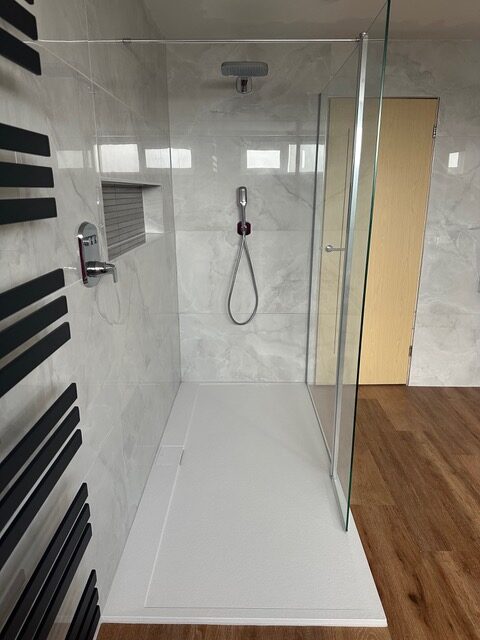
There is no single price for a new bathroom, because there is no single type of bathroom project. Simply replacing a bath, basin and WC in the same position is a very different project to reconfiguring the layout, converting to a wet room, or fitting a walk-in shower in place of a bath. Then there are other factors, like choosing entry-level products rather than a higher specification which change the final cost.
If you’re trying to work out your bathroom cost before taking the plunge and fitting a new bathroom it helps to understand what that figure is actually built from.
In broad terms, every bathroom project combines the same elements:
This page will walk you through these elements and hopefully give you a clearer sense of what your own bathroom renovation might cost.
The size of the room matters, but it’s rarely the only factor in the cost of a new bathroom. Two bathrooms of exactly the same dimensions can end up with very different final costs, depending on the product specification chosen, the existing condition of the room, whether the layout is changing, how much plumbing and electrical work is required, the extent of the tiling, the furniture selected, and the amount of preparation and finishing involved.
It’s more useful to think in terms of broad project types than a single average bathroom cost. Here’s what tends to separate one tier of a bathroom project from the next.
Typically characterised by:
Potentially includes:
May include:
Understanding what moves a project from one of these levels to the next is often more useful than working out a single headline figure, and it’s the question we’ll keep coming back to throughout this guide.
An ensuite may be smaller than a family bathroom, but many of the same installation stages still have to be covered. It’s easy to assume a smaller room means a proportionately smaller bill, but plumbing, electrical work, ventilation, waterproofing, tiling, sanitaryware installation and finishing are all still required, just within a more compact footprint.
Several factors influence ensuite bathroom cost specifically:
It’s worth separating these two scenarios clearly, because they involve very different amounts of work: refurbishing an existing ensuite generally means working within plumbing and drainage that’s already in place, while creating a completely new ensuite in a bedroom or other space that’s never had one can involve substantially more plumbing, drainage, ventilation, electrical and construction work. We’ll be able to give you a clearer picture of where your project sits once we understand the room.
The defining feature of a wet room isn’t the shower; it’s what happens beneath the finished surfaces. A correctly prepared and waterproofed wet room floor can require more preparatory work than fitting a conventional shower tray, which is part of why wet room cost can differ from a standard shower room installation.
Factors that typically influence the cost of a wet room include:
As with ensuites, it’s worth thinking about your project as one of two broad scopes: refurbishing an existing wet room, or converting a room into a wet room for the first time. These can involve quite different amounts of underlying work, even when the finished result looks similar.
“Walk-in shower” can describe several genuinely different installations — a low-profile tray with a screen, a large-format tray, a level-access shower, a full walk-in enclosure, or a wet-room-style shower area with no tray at all. Not every walk-in shower requires a full wet-room installation, and that distinction can have a significant effect on cost.
Cost variables to be aware of include:
If you’re converting from a bath to a walk-in shower, it’s also worth factoring in that the existing water and waste connections may need to be altered to suit the new position and drainage requirements.
The bathroom products are only one part of the project. A significant proportion of the work – and therefore the cost – happens before those products are ever installed, which is why comparing the price of a bathroom suite with the price of a complete fitted bathroom can be misleading. Here’s a breakdown of the stages a typical installation moves through:
Potentially includes:
Potentially includes:
Potentially includes:
Potentially includes:
Potentially includes:
Potentially includes:
Potentially includes:
From this list you’ll realise that there’s a lot more in a bathroom installation quote than simply “bathroom products plus a plumber.” A full renovation requires coordination between several trades and multiple stages of preparation, which accounts in large part for the cost.
The most expensive decision you’ll make when totting up the cost of a new bathroom isn’t necessarily whether or not to choose a more expensive tap. Changing what sits behind the walls and beneath the floor can have a much greater impact on your final figure. Here’s what tends to affect the number most:
Keeping the WC, basin, bath and shower in broadly similar positions will often require less plumbing work than moving everything around. Relocating fittings can mean altering the soil pipe, waste routes, water supplies, floor construction or access to existing pipework.
Older bathrooms can conceal damaged walls, uneven floors, deteriorated substrates, old plumbing, previous leaks or inadequate ventilation which come to light once work begins. Not every hidden issue can be identified until the existing bathroom has been removed, which is one reason quotations can need adjusting as a project progresses.
The WC, basin, bath, shower, vanity, furniture and brassware you choose can range considerably in cost, without there being a “right” or “wrong” choice. It comes down to what matters most to you in daily use.
Tile cost, tile size, pattern and layout, wall coverage, floor area and the amount of preparation required all play a part. A more expensive tile doesn’t necessarily mean a proportionately more expensive tiling job. Installation complexity matters just as much as the tile itself.
A standard shower, a thermostatic or concealed system, a rainfall head, multiple outlets, a shower pump, a walk-in enclosure or a full wet-room configuration each carry a different cost, largely driven by the plumbing and preparation behind them.
Freestanding, wall-hung or fully fitted furniture, storage requirements, worktops and bespoke sizing all affect the final figure.
New lighting positions, extractor fans, illuminated mirrors, additional circuits, underfloor heating, an electric shower or a heated towel rail all add to the electrical bill.
A heated towel rail versus a radiator, underfloor heating, and the specification of your extractor fan or ventilation upgrade all factor into cost.
Difficult access, structural alterations, making good, extensive preparation, drainage changes, creating a new ensuite or converting to a wet room all add time and cost to the project, beyond a standard like-for-like replacement.
It’s useful to show what tends to change as the available budget increases. The bands below are intended to illustrate project scope, not act as fixed packages. No two projects within a category will necessarily have the same budget.
Potential characteristics:
This level of project tends to suit homeowners whose priority is replacing an ageing bathroom without significantly altering the room.
Potential characteristics:
This is likely to represent the widest, most full-service bathroom renovation category.
Potential characteristics:
A bathroom suite advertised for a particular price tells you what the product items cost to buy – not what it will cost to fit them into your bathroom. Headline suite pricing typically excludes installation, removal of the old bathroom, plumbing alterations, electrical work, tiling, waterproofing, preparation, flooring, heating, waste removal and accessories. None of that makes suite pricing misleading; it’s simply describing a different part of the project. Understanding the gap between the two is one of the most useful things you can do before comparing quotations.
A sensible bathroom budget isn’t necessarily about spending more everywhere. It’s about deciding where additional spend will make the biggest difference. Because shower valves, brassware and frequently used sanitaryware are handled daily, and because waterproofing, preparation, ventilation and installation quality affect how well the room performs over the years, these are generally worth prioritising.
By comparison, there’s often more flexibility in tile ranges, decorative accessories, certain furniture finishes, mirrors and feature products. These are areas where specification can be adjusted without compromising how the bathroom actually works day to day.
Sometimes moving the layout creates a significantly better bathroom, and that’s not something to avoid on principle. The important thing is understanding the additional work and cost involved before making the decision, so it’s a considered choice rather than a surprise.
When you’re comparing bathroom installation quotes, it’s worth checking what’s included in each one:
Comparing scope as well as price gives you a far more accurate picture of value than comparing the headline figures alone.
Broad guides like this one are useful for early budgeting, but a meaningful bathroom quote depends on understanding your specific room: its existing condition, the layout you have in mind, your product specification, and the plumbing, electrical, tiling and finishing work involved.
You don’t need to have every product selected before discussing your budget. An initial conversation can help establish what’s realistic for your room and the level of specification you’re considering.
Feel Free to Contact Port Marine Bathrooms to Discuss Your Bathroom Budget. Arrange a bathroom consultation or visit our Portishead showroom to see products and finishes in person.